
Flood Damage Restoration — Jacksonville, FL
Direct answer: Flood damage restoration in Jacksonville requires rapid extraction of contaminated water, sanitary removal of porous building materials, antimicrobial washdowns, and industrial structural drying. Because riverine and coastal floodwaters contain Category 3 bio-contaminants, quick professional intervention prevents microbial decay and foundation weakening. Call (904) 663-0696 to connect with licensed local restoration contractors.
Flood damage is treated differently from a plumbing leak because of what's in the water. Floodwater — whether from storm surge, heavy rainfall, or a rising St. Johns River — typically carries contaminants that clean-water damage doesn't, which changes how the restoration process works.

What makes flood damage different from other water damage?
Floodwater is classified as "black water" in almost all cases, because it picks up contaminants — soil, chemicals, bacteria — as it travels across yards, streets, and drainage systems before entering a home. That means the restoration process leans more heavily on disinfection and material removal, since porous items exposed to floodwater usually can't be safely dried and kept; they need to be removed and replaced.
Which Jacksonville areas see the most flood damage?
Riverside and San Marco face storm surge risk due to their proximity to the St. Johns River during tropical storms and hurricanes. Westside and Northside see flood damage more from drainage system limitations during heavy rainfall — a risk that's present well outside hurricane season, any time Jacksonville gets a heavy multi-day rain event.
Is flood damage covered by homeowners insurance?
This is one of the most common and costly misunderstandings in Florida. Standard homeowners insurance generally does not cover flood damage — flooding requires a separate flood insurance policy, typically through the National Flood Insurance Program or a private flood carrier. If your home took on water from rising groundwater, storm surge, or overwhelmed drainage rather than a plumbing failure, your standard policy likely won't apply. This is worth confirming with your insurance agent before a storm season arrives, not during one.
What's the first step after a flood event?
Once it's safe to return to the property, avoid contact with standing floodwater directly — treat it as contaminated. Document the damage with photos before anything is moved or cleaned, since this supports both flood insurance claims and any FEMA assistance applications if the event triggers a federal disaster declaration. Then call for extraction and assessment as soon as possible; floodwater sitting in a structure accelerates both material damage and mold risk faster than clean water does.
Duval County Flood Zones & Surge Exposure
Whether you're located near riverfront surge corridors in Riverside and San Marco or in drainage-vulnerable pockets of Westside and Northside, our technicians respond 24/7 with commercial extractors and antimicrobial treatments.
How does riverine flooding along the St. Johns River impact Jacksonville homes?
Riverine flooding along the St. Johns River impacts Jacksonville homes through sustained high-water crests, tidal backwater pressure, and slow recession rates. Unlike inland flash floods that drain away within hours, the St. Johns River flows northward at an extremely gentle gradient, meaning nor'easters, tropical storms, and seasonal king tides can trap floodwaters in residential zones for multiple days.
In riverfront neighborhoods like Riverside, San Marco, and Downtown Jacksonville, extended saturation allows river water to penetrate exterior cladding, seep through subfloor penetrations, and saturate masonry foundations, necessitating deep structural stabilization.
Why is brackish and storm surge water uniquely corrosive to building structures?
Brackish and storm surge floodwaters entering from the Atlantic Ocean and river estuaries contain high concentrations of dissolved marine salts that dramatically accelerate structural decay and electrical corrosion. Salt residue leaves behind hygroscopic mineral deposits that continuously draw ambient moisture from Jacksonville's humid coastal air, preventing building materials from drying naturally.
When salty floodwaters submerge drywall fasteners, metal stud tracks, electrical wiring, and HVAC ductwork, rapid galvanic corrosion occurs. Restoration professionals must perform specialized desalinization rinses and antimicrobial washdowns before structural drying can succeed, ensuring lingering salt crystals do not cause perpetual dampness.
What is a drywall flood cut and why is it standard procedure after a flood?
A drywall flood cut is the precise removal of wallboard typically 12 to 24 inches above the highest standing water level to extract trapped moisture and prevent hidden mold proliferation. Gypsum drywall acts like a sponge, pulling floodwater upward through its paper backing and internal gypsum core via wicking action.
Behind the visible drywall, wet fiberglass or cellulose insulation traps stagnant water against framing studs, creating an unventilated microbial incubator. By making a straight horizontal flood cut, restoration technicians remove saturated insulation, expose soaked wooden framing to circulating airflow, and facilitate antimicrobial application directly to the structural skeleton.
How do technicians clean mud, silt, and biohazard sediment after a flood recedes?
Cleaning heavy mud, silt, and contaminated sediment after floodwaters recede requires physical shoveling, pressure extraction, and enzymatic cleaning before dehumidifiers can be turned on. Floodwaters deposit a thick layer of fine alluvial silt mixed with petroleum residues, street runoff, and biological toxins across floors and wall plates.
If this sediment layer dries in place, it hardens into concrete-like dust that aerosolizes hazardous particulates into the air. Technicians wash down concrete and masonry surfaces with clean water, apply broad-spectrum disinfectant solutions, and vacuum out slurry with specialized biohazard extraction pumps.
What documentation is needed for NFIP and private flood insurance adjusters?
Filing a claim with the National Flood Insurance Program (NFIP) or a private flood carrier requires detailed photographic inventories, water line height measurements, and structural moisture mapping. Flood insurance adjusters require proof of the physical waterline on interior walls, serial numbers and nameplates from flood-damaged appliances and HVAC compressors, and comprehensive logs of all extracted materials.
Licensed restoration professionals generate room-by-room moisture logs and drying progress charts, ensuring homeowners have verifiable third-party documentation to substantiate their proof of loss claims.
How does Water Damage Restoration Jacksonville connect you with flood restoration contractors?
Water Damage Restoration Jacksonville connects Jacksonville homeowners with licensed, insured local water damage restoration professionals throughout Duval County. Dealing with the aftermath of river flooding or storm surge requires heavy industrial equipment, specialized sanitization agents, and experienced project coordination.
Whether your home is located in Southside, Avondale, Westside, or historic river neighborhoods, calling (904) 663-0696 connects you immediately with local restoration specialists equipped to extract floodwaters, remove ruined materials, and restore your property safely.
Plumbing Flood vs Storm Flood vs Storm Surge: What Differs for Jacksonville Homes
The physical source of flooding determines contamination classification, secondary building deterioration, and necessary structural remediation methods across Duval County.
| Flood Classification | Contamination Category | Jacksonville Area Exposure | Materials Most Affected | Remediation & Disposal Protocol |
|---|---|---|---|---|
| Plumbing Flood | Category 1 or 2 (Clean tap or domestic drain water) | Equal across all neighborhoods; slab and multistory homes, condominiums, and apartments. | Ceilings, wall cavities, subfloors, and cabinetry directly along interior plumbing routes. | Water line shutoff, targeted cavity injection drying, structural dehumidification; porous assemblies often saved. |
| Storm Surface Flood | Category 2 or 3 (Outdoor runoff with soil, silt, fertilizers) | Westside retention zones, low-lying Southside parcels, neighborhoods with saturated surface drainage. | Lower drywall sections (bottom 1–2 ft), baseboards, fiberglass batt insulation, crawl space earth. | Perimeter trenching/diversion, mud extraction, flood-cut drywall removal, antimicrobial sanitizing wash. |
| Storm Surge Flood | Category 3 (Black water with river mud, sewer overflows, salt) | Riverside, San Marco waterfront, Jacksonville Beach, Atlantic Beach, and intracoastal marshlands. | Historic plaster, hardwood flooring, electrical wall boxes, HVAC ductwork, structural pier framing. | Emergency containment, mandatory tear-out of submerged porous materials, salt desalinization rinse, heavy-duty drying. |
Regardless of flood source, rapid professional water extraction within the first 24 hours drastically reduces structural framing warping and secondary mold infestation.

Our 4-Step Flood Restoration Process
Safety Assessment
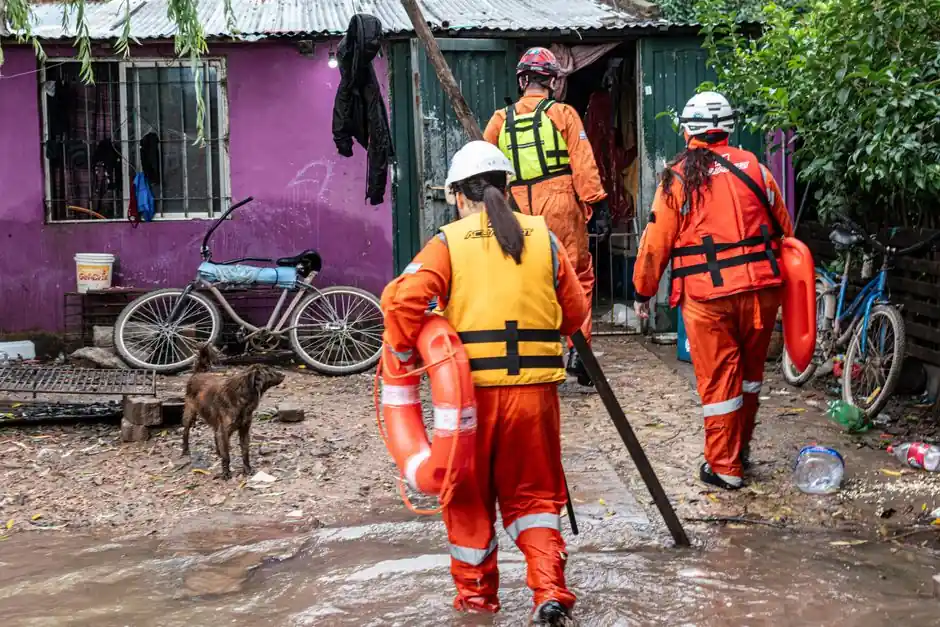
Floodwater is treated as hazardous. Our team uses full protective equipment from arrival.
Water Removal
High-capacity pumps extract floodwater, followed by detailed moisture mapping.
Contaminated Material Removal
Porous materials exposed to floodwater are safely removed and disposed of.
Disinfection & Drying
Antimicrobial treatment, structural drying, and air quality verification complete the job.
Additional Frequently Asked Questions About Flood Damage Restoration
How long does a home take to dry out after major flood damage in Jacksonville?
Complete structural drying after a major flood typically takes between 3 to 7 days, depending on the building materials impacted, the depth of water intrusion, and outdoor humidity conditions. Deploying commercial desiccant dehumidifiers and high-velocity air movers expedites deep moisture extraction from concrete slabs and structural wood framing.
Can a concrete slab foundation be permanently damaged by floodwaters?
While concrete does not rot, floodwaters saturate concrete pores, introducing moisture and corrosive salts that can rust internal rebar reinforcement and compromise flooring adhesives. Specialized structural drying equipment and moisture meters ensure the slab reaches acceptable moisture thresholds before replacement flooring is installed.
Should I run my air conditioner after my Jacksonville home floods?
You should never turn on your central HVAC system if floodwaters reached ductwork, vents, or electrical components, as doing so can blow mold spores and contaminated dust into every room. Have a restoration professional and HVAC specialist inspect and sanitize the duct system before restoring power.
What is the estimated cost of flood damage restoration in Jacksonville?
Flood damage restoration costs in Jacksonville typically range from $2,500 to $10,000 or more, depending on the flood depth, square footage, whether Category 3 black water is involved, and the extent of demolition needed for drywall and flooring. Calling (904) 663-0696 connects you with local experts who provide on-site assessments and help coordinate insurance documentation.